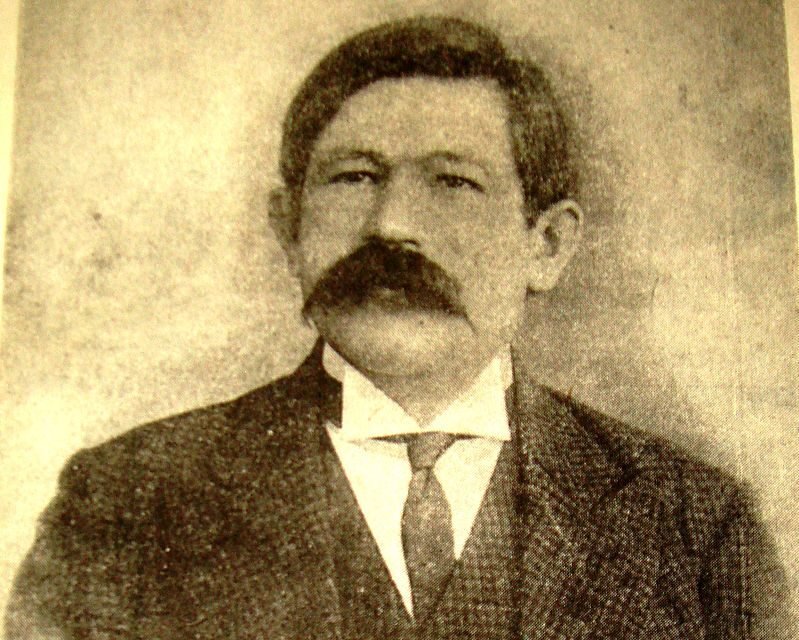
Ayaz Ishaki was born on February 10, 1978, in the Yaushirme Tatar village of the Chistopol district of the Kazan province (Tatarstan). His father was an imam in the aul and at the same time taught at school, while at home he was constantly engaged in agriculture. Ayaz Ishaki grew up among his rural peers. In 1890, his parents sent Ayaz to the Chistopol Madrasa (a school attached to the mosque).
In 1893, Ayaz Ishaki became a student of the famous Galliam Gazrat school in the city of Kazan. His worldview expanded, and he began to read the newspaper “Tarjiman”, which was published in Crimea by Izmail Gasprynskyi, exerting a great influence on the Tatar intelligentsia. He also read the Azerbaijani newspaper “Eginchi”, published by Hasan Maliksadeh. Thanks to these newspapers, Ayaz Ishaki got acquainted with the national and political life of the Turks of Crimea and the Caucasus, as well as the life of Turkey. In 1897, Ayaz Ishaki wrote the short story “Jarakh Babai” (Grandfather Jarrah), but Russian censorship forbade its publication. Finally, Ayaz Ishaqi picked up the important theme of the short story “Talimate saadet” (Happiness in Science), which was published as a book in 1899 in Kazan. In this way, Ayaz Ishaki first became one of the leading Turkic writers of Kazan. To prepare teachers of the Russian language for schools, the Tsarist government opened a special Russian-Tatar school in Kazan in 1872. Thus, the 20-year-old Ayaz Ishaki enrolled in it to learn the Russian language and receive a European education. Many students studied in this school, who over time became leaders of Idel-Ural – Sadri Maksudi, Sh.Muhammedyar, G.Davleka, A. Fahretdin, F.Toktar, K.Khasanov, G.Teregulov, M.Almaev, G.Kamal and many others. In parallel with studying the Russian language and literature, Ayaz Ishaki studied the works of Turkic writers – Shikhabutdin Marjani, Kayum Nasir, Hadi Maksudi and others. While studying at this institution, Ayaz Ishaki got to know firsthand the assimilationist policy of the Russian government towards the nations of the Idel-Urals and the colonial policy towards the Tatar population.
In 1901, Ayaz Ishaki began writing a large novel in 3 parts, “Calf of Goats” (The Beggar), which he finished in 1908. Along with recognition in literature, Ayaz Ishaki’s authority among the Tatar students of Kazan increased at the same time. He gradually became a central figure for the youth who thought nationally and consciously sought to fight for the national identity of the Tatars and other Turkic peoples. In 1901, the first illegal national organization “Shakirtlik” (Studentship) was founded, as well as the organization “Hurriyat” (Freedom), headed by Ayaz Ishaki. In 1905, the illegal newspaper “Terreki” (Progress) began to be published, edited and published by Ayaz Ishaki. This newspaper condemned the Russian government and talked about the identity of the Tatar people and the need to fight for the independence of Tatarstan. The articles had a great resonance among the Tatar society and therefore they caused concern among the police. In 1902, the newspaper “Terreki” (Progress) was banned, and an investigation was started against Ayaz Ishaki. However, Ayaz Ishaki managed to finish school and get a Russian language teacher’s diploma for Turkic primary schools. He leaves for Orenburg, away from the supervision of the Kazan police. There he got a position as a teacher in a madrasa, simultaneously heading the Hurriyat (Freedom) organization. In 1905, this organization had branches in Kazan and other cities, an illegal printing press, and an established connection with Baku, Bakhchisaray, and Turkestan.
“Hurriyat” (Freedom) extended its connections with the national liberation movements of other non-Russian nations and also had connections with the leaders of the Russian Party of Socialist Revolutionaries (SRs). Gradually, representatives of peoples who practiced Islam in the Russian Empire began to join forces. In August 1905, the first “Congress of Muslims of the Russian Empire” was held in Nizhny Novgorod. During 1905-1906, representatives of the non-Russian Muslim peoples of the Russian Empire organized the Ittifak (Unification) party after their three congresses. At the III Congress, a Central Committee of 15 people was elected, among whom were R. Ibrahimov, and Yu. Akchura, S. Alkin, A. M. Tobchibash, I. Gasprali, and others. Although the program of “Ittifak” was very similar to the program of the Russian cadets, the direction of this party was national and Tatar. Such moderation of this party did not satisfy the aspirations of the youth and intelligentsia of Tatarstan. The revolution brought greater freedom to the Tatars in the field of religious rites, journalism, and solving social issues. Other political groups and parties emerged and began to develop. “Hurriyat” (Freedom) finally connected its activities with the socialist revolutionaries, because it did not support the position of the “Ittifaq” (Unification) party, whose position was moderate and advocated a constitutional monarchy and demanded only national and cultural autonomy.
In 1906, the Hurriyat (Freedom) party started publishing the newspaper Tan Yulduzi (Early Star), and Ayaz Ishaqi became its editor. The radical programme of the Turkic SRs put forward several demands – the creation of local independent national governing bodies, national freedom, and in land policy – the transfer of state and landowner land to Tatar and Bashkir peasants. In 1905, about 50 Russian landowners in the Kazan province occupied more than half of all arable land. The newspaper “Tan Yulduzi” (Early Star) was closed by the police after the publication of 63 issues in September 1906, and its editor Ayaz Ishaki was sent to his native aul with a ban on changing his place of residence. Ayaz Ishaki did not comply with these decisions of the police, began to live illegally in Kazan and in November 1906 began publishing the magazine “Tan Majmuasi”.
Already in April 1907, the police closed the magazine, and Ayaz Ishaki was forced to go completely underground. He started publishing the magazine “Taush” (Voice), but this did not last long either, in early June 1907, the police arrested Ayaz Ishaki. After six months of imprisonment, he was sent to Arkhangelsk province. Already in the autumn of 1908, Ayaz Ishaki escaped from exile to St. Petersburg, where he developed active activities among Tatar workers and students. In 1909, Ayaz Ishaki left for Turkey, lived in Istanbul, and later left for Finland. In 1911, he returned to St. Petersburg, where he resumed political work among the Kazan Tatars, of whom 180,000 lived there at that time. The police arrested him again and sent him back to Arkhangelsk province. He was released in 1913 because then a broad amnesty was announced on the occasion of the 300th anniversary of the Romanov dynasty. After the outbreak of the First World War, Ayaz Ishaki moved the publication of his newspaper to Moscow, away from political censorship, and closer to the main mass of readers of Idel-Ural. At that time, about 200,000 people lived in Moscow. After the February Revolution of 1917, the Tatars and other Turks convened the “All-Russian Muslim Congress”, which began its work on May 1, 1917, in Moscow. The congress was attended by 970 delegates from all Turkic states of the former Russian Empire. The resolutions of the congress approved the proposal of the Azerbaijani delegate, Memed Emin Rasul-Zadeh, that in “the future democratic Russian federation, Turko-Muslims should establish their territorial and national autonomy.”
Ayaz Ishaki clarified that those “autonomous territories should be: Azerbaijan, North Caucasus, Crimea, Idel-Ural and Turkestan”. The result of this “All-Russian Muslim Congress” was the creation of the “Political Central Muslim Council” of 30 people, which had the task of dealing with the cultural, religious and political affairs of the Muslims of the former Russian Empire. Ayaz Ishaki was elected a member of this Council. Thanks to the active activities of Ayaz Ishaqi and Sadri Maqsudi, three congresses were held in June: military, clerical and Muslim (political). These three congresses at a joint meeting on July 22, 1917, proclaimed the “cultural and national autonomy of the peoples of Idel-Ural and Siberia” as a transitional stage in achieving full independence from Moscow. A “Milli Shura” (National Council) of 7 people was elected to convene the “Milliat Majlis” (Parliament). Professor Sadri Maksudi was elected as the head of the national council. The parliament was supposed to meet in the city of Ufa. Ayaz Ishaki managed the organization of elections from the regions to the parliament. The National Assembly (Parliament) was held on November 22, 1917. The first session of the National Assembly worked out the Idel-Ural constitution and laws that met the national and religious needs of the Idel-Ural peoples, outlined the borders and created small military units. The National Assembly (Parliament) elected the “Milli Idare” (National Board), headed by President Sadri Maksoudi. Several ministries and state secretariats were created.
Mirza Saidgerei Alkin presided over the War Council, which included Ayaz Ishaqi, who sought to speed up the formation of the armed forces. At the beginning of 1918, 14,000 armed soldiers were subordinate to the Idel-Ural National Assembly, but another 100,000 could not join the army due to a lack of weapons. In December 1917, the National Assembly of the Idel-Urals proclaimed an independent state called the “Idel-Ural United States”. The National Assembly concluded its first session on January 24, 1918, and set the start of the next session on May 5, 1918, the representatives dispersed to the districts, and the national board was left in Ufa. At the same time, the Bolshevik regime in Moscow issued an order to arrest Ayaz Ishaki, close the newspaper “Il” and confiscate the printing press. Ayaza Ishaki, without waiting for arrest, moved first to Samara, and then to Ufa. In April 1918, detachments of Moscow Bolsheviks carried out aggression against Idel-Ural and occupied its lands. They dispersed the National Board and closed all national magazines and newspapers. Some of the members were shot by the Bolsheviks, some went underground, and some moved to the city of Kzil-Yara (Petropavlovsk) in Siberia. It was there that Ayaz Ishaki moved and immediately started publishing the Mayak newspaper. In June 1918, the “Czech Corps” helped the Socialist-Revolutionaries and Admiral Kolchak seize power in Siberia and eliminate the Bolsheviks from the territory of the Idel-Urals. The National Board of Idel-Ural under the leadership of Ayaz Ishaki resumed its activities. In August 1918, national Turko-Tatar military units were organized in Kazan. But Admiral Kolchak, who fought with the Bolsheviks, simultaneously persecuted any non-Russian national movement. He did not recognize the National Board of Idel-Ural, persecuted its members and closed (autumn 1918) the Mayak newspaper.
In February 1919, the Bolsheviks again occupied the Idel-Ural lands and immediately began persecuting everyone who participated in national life. Finding himself between the attack of the white and red imperialists, Ayaz Ishaki and some of the members of the National Board of Idel-Ural decided to leave their homeland. The President of the National Board, Sadri Maksudi, and a member of the Board of Defence of the Rights of the Nations of the Idel-Urals and Commissioner of Foreign Affairs, Ayaz Ishaki, attended the Versailles Conference, where representatives of various European countries were introduced to the national aspirations of the people of the Idel-Urals. After moving to Turkey, Ayaz Ishaki started (in 1925) the publication of the magazine “Turk Yurdi” (Motherland of the Turks), but the Soviet pressure on the official Istanbul took its toll and the magazine was banned. Ayaz Ishaki was forced to leave for Europe. In 1928, in Berlin, Ayaz Ishaki created the “Committee for the Struggle for the Independence of the Nations of Idel-Ural” and published the monthly “Milli Yul” (National Way). This magazine is significant for all emigration from the Idel-Urals, it was also illegally imported to the USSR, where it strengthened anti-Bolshevik sentiments in the lands of the Idel-Urals. Before World War II, Ayaz Ishaki actively cooperated with “Prometheus” in Warsaw. In 1931, Ayaz Ishaki was present at the III Islamic Congress in Jerusalem, where he explained the tragic position of the Tatars and other peoples in the USSR.
In 1933-1935, Ayaz Ishaki was in the Far East – Manchuria, Korea, Japan, where he actively conducted work among the Tatar emigration. The Soviet newspapers of Tatarstan tried to denigrate the figure of Ayaz Ishaki, belittling his importance and calling him a “bourgeois nationalist” acting in the interests of Western capitalists. But this damaged his authority, and on the contrary, through such articles, the young people of the Idel-Urals learned about his activities and the work of the “Committee for the Struggle for the Independence of the Nations of the Idel-Urals” abroad, the purpose of which was the fight against Bolshevism and Russian imperialism. In Turkey, he was also actively involved in the education of Tatar youth and the youth of Idel-Ural.
Ayaz Ishaki died on July 22, 1954, at the age of 77 in Ankara, where he had lived in recent years with his daughter, Professor Sagadat Khanum. According to the will, he was buried in Istanbul. Ayaz Ishaki left behind many works and articles. His main work is the book “Idel-Ural”. It was first published in Paris in 1933 and has been translated into French, Polish, Russian and Japanese. During his life, Ayaz Ishaki wrote 46 books, political treatises, and many articles in newspapers and magazines edited by him.
His life and work will certainly influence the independent future of the entire Idel-Urals after the collapse and disappearance of the Russian peripheral sub-empire.
Prepared by Alex Siryi