

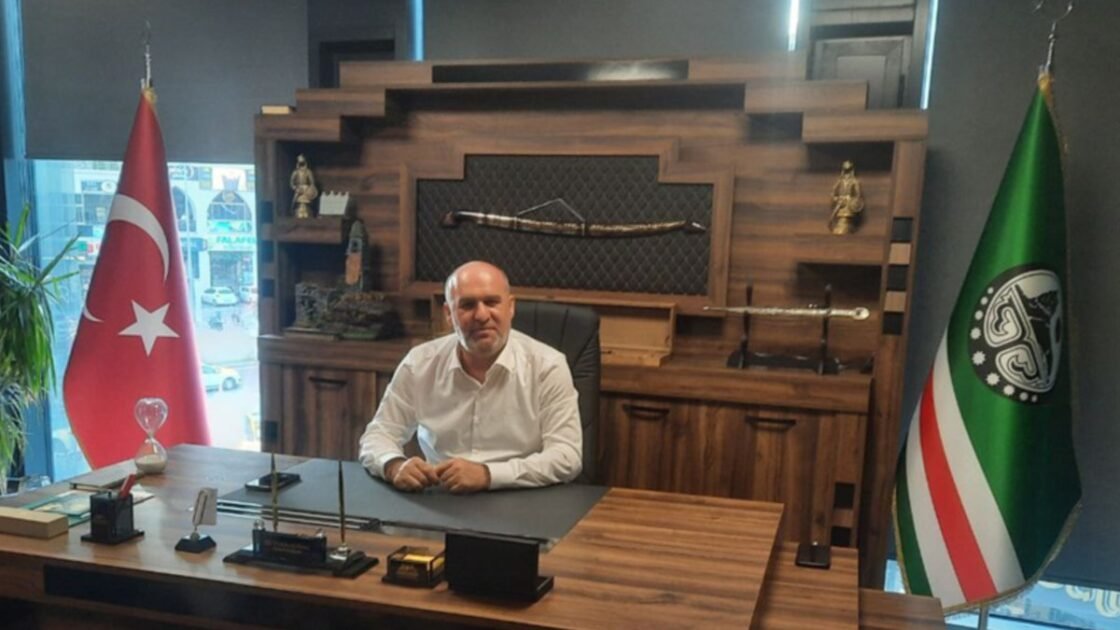
In an interview with Kavkaz.Realiya, Ali Viskhadzhiev spoke about the problems of the Caucasian diasporas in Turkey, about misunderstandings between supporters of Chechen independence and the Ukrainian authorities, and also shared how he sees the future of the Caucasus.
– By whom and for what purpose was the Kafkasder organization created?
– The Kafkasder organization was established in 2016. The initiators were Muhajirs ( migrants. – Ed. ), who live in Turkey. Chechens, Dagestanis, Ingush, Kabardians – all North Caucasian peoples are represented. Among them are veterans of the Chechen wars. The reason is the hard times we were going through then. In connection with the events in Syria, there was propaganda here that the Caucasians were supposedly the pillars of this terrorist organization (” Islamic State”. – Approx. ed. ).
All the authoritative muhajirs who came from there got together and decided to create the Kafkasder organization. The youth and authoritative people decided to show what we are doing here, what Turkey means to us. Our first task was human rights, to show our purpose. And in the future we began to deal with humanitarian aid, then we had to deal with legal issues.
– It is believed that the second Chechen war ended in 2006. 10 years have passed since then until the establishment of the organization. How did the Caucasian muhajirs live here during this time?
– Russian propaganda says that the war ended in 2006. But we believe that the war in Chechnya continues, that the Caucasian lands are occupied, regardless of what propaganda says, the war continues.
– In Turkey, the state functions in an unusual way for immigrants from the post-Soviet space. How do you manage to build relations with the Turkish state?
– In fact, we have a different mentality. But there are historical ties, it can be called the brotherhood of the Caucasian peoples and the people of Turkey. There is a special sympathy here for the Caucasians. But we had to explain to the Turkish government, our friends who supported us, what happened to our resistance. That is, those Caucasians who left for Syria and joined the ISIS organization became the cause of misunderstanding. We had to explain for a long time. We’ve done a great job on this. Two or three months ago, we met with President Recep Tayyip Erdogan, with ministers, deputies of different parties and explained our situation. And everywhere they met a positive, kind attitude towards Caucasians.
In the 19th century, the first Caucasian Muhajirs, the Circassians, appeared in Turkey. The Turks fell in love with our culture, I can say. From meetings, conversations, I saw disappointment for the only time in 2016, when a terrorist attack took place here. Then President Erdogan said: “Unfortunately, our Caucasian brothers also participated in this terrorist act.” It was a serious blow to us. We then gathered authoritative Turkish journalists. And they emphasized that in this terrorist organization there are representatives of all nations and there is no need to associate it with any one people. Today there are many issues that need to be addressed, but in general they trust us.
– What problems are most often addressed to Kafrasder?
– When there are conflicts involving our youth, the police turn to us, we are known and respected, so we regulate different situations. Relatives of our fellow countrymen who get into unpleasant situations here, commit offenses, but sometimes it is difficult to explain that they will not be able to help, apply.
All this does not contribute to trust between us and the Ukrainian authorities.
Together with other organizations, with the descendants of the Caucasian muhajirs of the century before last, we compiled a report on what legal problems we are facing and what we can do. The solution to many problems is to grant citizenship to muhajirs, as was the case in 2013. It was an exceptional case, then a lot of work was done, I also participated in it.
People come here and often remain without documents or they are expired. This means that they cannot send their child to school or kindergarten or receive medical care. And we have to work with these situations. We help a significant number of families financially, including widows and elderly people who lost their health in the war. We support displaced children, we buy necessary things for the school.
– You mentioned human rights, legal assistance. Here, lawyers work differently than in post-Soviet countries, where the client can freely discuss the situation with the lawyer. How do you manage to find a common language with the local lawyers?
– Yes, it makes no sense to often pull a lawyer, because the legal procedures are clearly written out. There are three levels of courts, and until the case goes through the stages prescribed by law, there is no need to distract a lawyer, because everything goes on as usual and this cannot be changed. There are no roundabout, informal ways as in the post-Soviet space. Even if the lawyer is offered a double fee, and he postpones the cases of other clients, it still cannot have much effect.
– There is a special category of those in need of help – the widows of those who went to Syria and died there. Among them are many natives of the Caucasian republics living in Turkey without documents. But they cannot leave and are under the threat of being sent to a deportation prison. How to help them?
– We are discussing with the Turkish authorities the situation of widows who left Syria. Obviously, this should be a political decision. But so far he’s gone. We are working on it.
– Are there many people from the Caucasus in Turkey who have serious combat experience and advocate independence from Russia? Are they considering the possibility of participating in the war on the side of Ukraine?
– When Abdulkhakim ( Rustam Azhiev ) left for Ukraine in 2022 , many expected that veterans with experience of the war in the Caucasus and Syria would follow him. But that did not happen. My opinion: because of the lack of trust in the Ukrainian authorities. What was the extradition to Russia of Timur Tumgoev ( a member of the Sheikh Mansur battalion, sentenced to 19 years in Russia. – Approx. ed. ) worth. Many people remember how Ukraine extradited the Dagestani Alkhas, who was sent to Belarus, although it was clear to everyone that the Russian special services would take him away from there. The problems with the documents of those of our brothers who have been fighting in Ukraine since 2014 have not been resolved. All this does not contribute to trust between us and the authorities of Ukraine. And that’s why it happens, few go to fight there.
– Is there a threat of assimilation of Caucasians outside the homeland? Will Chechen youth return to their homeland after the end of the war?
– Such a threat exists. But the scale of this threat is different in individual states. The experience of previous generations of muhajirs testifies: in Turkey, Jordan, both Chechens and Circassians managed to preserve their language, their national identity. As for Europe, the situation is more complicated there. We need to unite, create our own schools, learn the language, this is a guarantee that the next generations, those who decide to stay outside the Caucasus, will retain their identity.
– In what form do you see the future of the peoples of the Caucasus?
To forgive torture, bullying, violence against women – I think that this is impossible
– It will be an association of the peoples of the North Caucasus, a variant of the Mountain Republic – if we talk about the basis, about what the state will be based on. It is obvious to me that our religion, Islam, will play a decisive role. Even those of us who talk about democracy today understand this. In Soviet times, old people judged us according to Sharia. And although there was no state, there was no mechanism to force the implementation of a decision that one did not like, but everyone accepted and implemented it. So I associate the structure of our future state of Caucasians with Islam.
– If Chechnya becomes independent and you return home, what will be the most difficult thing?
– I think about it a lot. After the first war in Chechnya, our leaders, our elders said: we won’t take revenge, we must leave this in the past and move on. We later realized that it was a mistake. If we used every opportunity not to kill the Chechens who fought against us, then there was no such thing on their part. But even the death of our fighters in battle can be forgiven, this is war. But how to forgive torture, bullying, violence against women – I think that this is impossible. The most difficult thing will be how to deal with those who did all this right. We have a religion, let’s follow our religion.
Kavkaz.com






